The Paekākāriki Services Club Community Grants Trust provides funding exclusively for those who live in Paekākāriki, continuing a local tradition of support that began in 1947, after the end of the Second World War.
The Paekākāriki Services Club was set up to bring the local community together whether their service had been at home or abroad. The return to civilian life after years of war is hard to imagine now.
In 1992 Graham Fox compiled a short history of the club. Graham had lived in Paekākāriki since 1938 and been a member of the club since 1949. He wrote:
“Perhaps pens more able than mine could better undertake this recording, but in the absence of other volunteers, and the diminishing number of members and ex-members who are still living, I felt obliged to at least start the ball rolling.”
I am glad he did write it. I found his history absolutely enchanting.
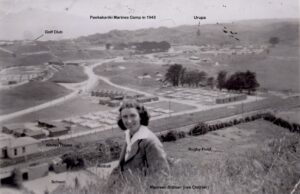
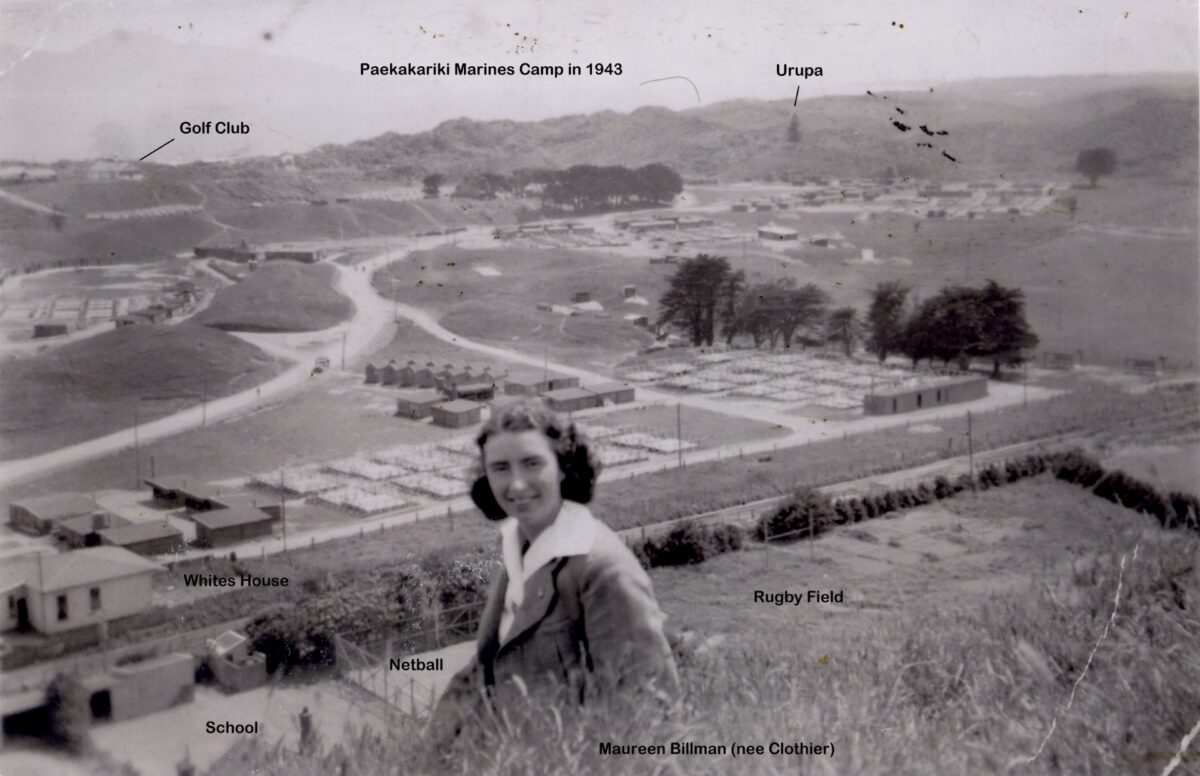
The building at the north end of Wellington Road began its life as the clubhouse for the golf course in the 1920s before becoming the US Marine officers’ mess and recreation centre during the war. The Services Club leased it from the Lands Department, purchasing it in 1950 for £1960.
Membership soon exceeded 100. The building was extended and improved during the late fifties and throughout the 1960s. There were billiards and snooker tables, darts, indoor bowls, social functions, Anzac day observance and children’s Christmas parties. The club also supported local organisations, including sporting groups.
It wasn’t plain sailing. Graham wrote that during the early years several members, including Past-Presidents and Committee members, were suspended or expelled:
“The early years of operations were interspersed with incidents resulting from over exuberance by members who were relishing the freedom of civvy life after the regimentation and stress of military and related service.”
To find out more about the club, I spoke to Joan Hilder. Joan moved to the village in 1960 and has ‘pretty much’ lived here ever since. I also grew up here in the late 1960s and 70s. I remember Joan’s mother, though never as Margaret. She was Mrs Leslie, the clerical assistant at Paekākāriki school.
I told Joan that one Saturday afternoon my friend Karen Simpson and I went to the Mercury in Paraparaumu, back then we said, the pictures in Pram. Lo and behold, Mrs Leslie was selling the tickets. How could this be? She was the office lady, not the ticket lady. Were there two Mrs Leslies?
Joan’s father Harry Leslie was the projectionist at the Mercury. Harry also worked on the railway, becoming Assistant Traffic Manager for the Wellington district. As Joan pointed out, the railways weren’t just trains, they used all their own people. They employed builders, plumbers, electricians and other skilled trades.
Harry was also a Service Club member.
Joan said:
“Dad was never a great man for committees. He was more a guy who just did things if something needed doing. He was on the committee in the latter years, not in the early years.”
Joan remembered the club as a place her father disappeared to on a Sunday. He worked during the week, he did the movies, Friday, Saturday so Sunday was club day.
“I can remember Dad going up there and all of his old cronies were up there…I remember Dad taking us up and I remember seeing the giant, enormous pool tables, they had wonderful pool tables. I actually think I had my 40th birthday party up there.”
My own father disappeared on Sundays too.
“Off to the club.” He’d say.
Mum would say, “You can’t have one day without drinking!”
When I asked my brother Rob what he remembered, he said.
“I thought it was just a place where Dad could drink on Sundays if he wasn’t taking a half g to Bill Muirs after picking up a barracuda loaf from the beach shop.”
The club had explored obtaining a charter and an ancillary liquor licence. A club charter would have meant restrictive hours, and most members worked in Wellington and attended during the weekends. An ancillary licence wasn’t available, so members stored their own alcohol in what was reported in Graham’s history as a strictly controlled refrigerated locker system.
Joan remembered this very clearly:
“So, they’d take their grog up and of course back in those days the old flagons were the go-to drinking so…Dad had this bowling bag that could conveniently fit in two half g’s. I’ve got this very clear memory of Dad’s little bowling bag. It was like a suitcase hard sides and a little lock and everything up the top. He’d take that up and pop it in the locker.”
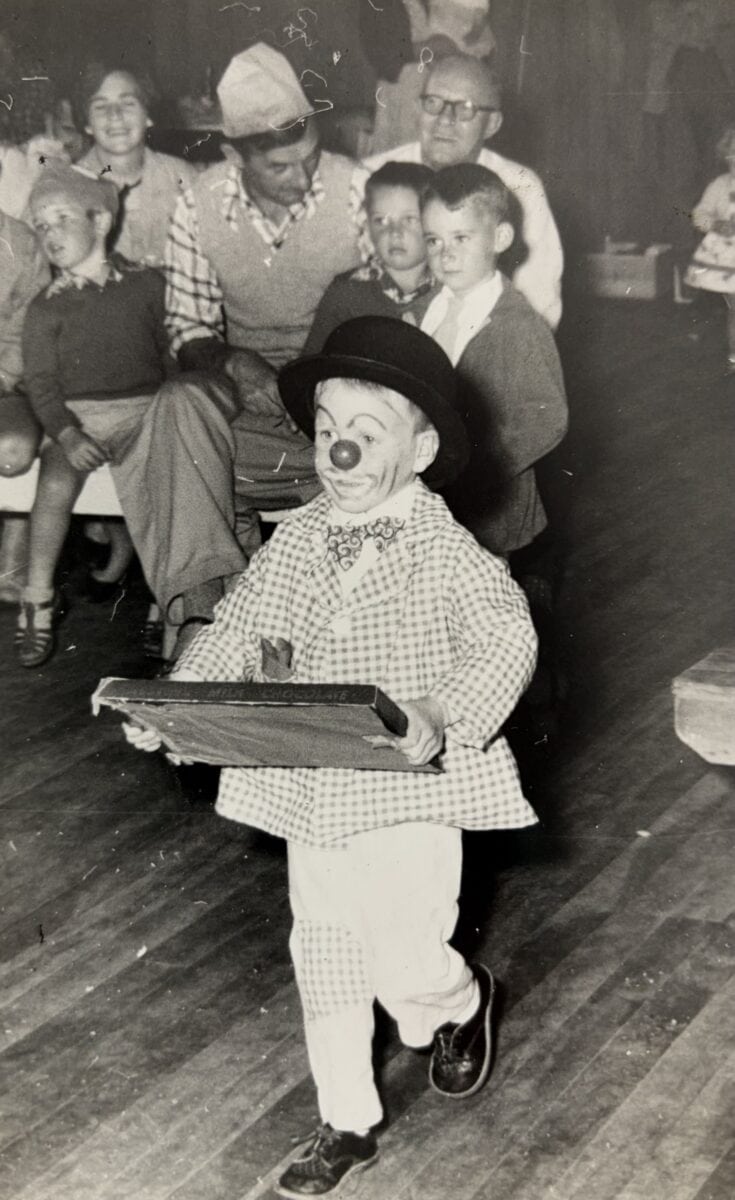
The Christmas party is one of my strongest childhood memories. The food, presents and entertainment were elaborate. Everyone dressed up. I was convinced I was meeting the real Father Christmas.
My brother Craig remembers the Christmas parties too.
“We got good presents and lunch and met Father Christmas. I think he came in the fire truck…Thinking about it now it’s funny that things like that were in such a small town.”
The other major occasion was ANZAC Day.
“Dad was away all day on ANZAC Day,” said Joan. “I have no idea who used to do the catering but apparently, they had wonderful food…” The rest of the family did not attend. “It was very much a blokes thing back in those days.”
By the late 1980s the club was facing falling membership and an aging membership base. Harry was heavily involved in the dissolution of the club, and creating the Trust. Joan thinks because she and her mum were involved in the school, Joan was a teacher, they had an influence on the decision to make youth a priority. “It was for all of the community but with an emphasis on the youth.”
Applications for this year’s grants are now open. Perhaps your project will become part of the next chapter in this story.
Here is the link to the fund page and application form https://www.publictrust.co.nz/grants/paekakariki-services-club-charitable-trust/
Top photo, credit Dave Johnson, Paekakariki Museum. Photo below, a celebration at the old Services Club, credit: Gloria Hakkens.